
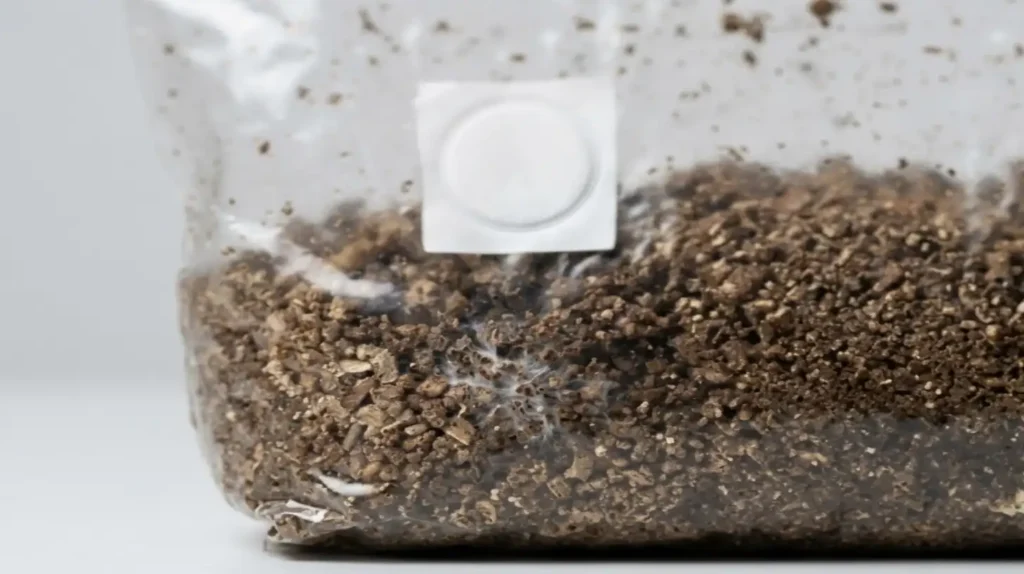
Grow Bag Colonisation Failure: What It Usually Means
When a grow bag is not colonising, it does not always mean total failure.
In most cases, it is a sign that environmental conditions or biological activity are outside optimal range.
Colonisation issues typically fall into three categories:
inactive growth, stalled growth, or competing contamination.
⚡ Fast Diagnosis Summary
If your grow bag shows no colonisation, the most likely causes are:
temperature instability (too low in UK homes), contaminated substrate, weak or dead inoculation material, or insufficient oxygen exchange.
What Your Grow Bag Symptoms Actually Mean
No visible growth at all
Usually either early-stage incubation (normal) or non-viable spores/liquid culture.
Slow scattered white patches
Typically caused by low temperature or weak inoculation distribution.
Growth starts then stops
Often linked to CO₂ buildup, temperature drop, or moisture imbalance.
Discolouration or strange textures
Strong indicator of contamination taking control of the substrate.
UK Environmental Reality: Why Colonisation Often Slows
In many UK homes, ambient temperatures fluctuate between 17–20°C, especially during colder months.
This range is below the ideal metabolic zone for consistent mycelial expansion.
As a result, colonisation may still occur but becomes significantly slower or inconsistent.
Optimal Incubation Temperature Range
For stable colonisation, the recommended temperature is 24–26°C.
This range supports consistent enzymatic activity and predictable mycelial growth.
- Below 18°C: metabolic slowdown or dormancy risk
- 18–21°C: slow but stable colonisation possible
- 24–26°C: optimal growth environment
- Above 27°C: stress and contamination risk increases
Main Failure Modes in Grow Bag Colonisation
1. Environmental Suppression
The most common issue is not biological failure but environmental suppression, especially temperature instability.
2. Substrate Contamination Dominance
Contaminants often colonise faster than mycelium and take over nutrient resources early.
3. Inoculation Failure Point
If spores or liquid culture are weak, colonisation never properly initiates.
4. Gas Exchange Restriction
Lack of oxygen flow can significantly slow or stall internal growth processes.
Step-by-Step Diagnostic Logic
- Day 0–7: No growth = normal incubation phase
- Day 7–14: no change = check temperature + inoculum quality
- After 14 days: no growth = likely biological or environmental failure
- Growth then stall: CO₂ or temperature instability
- Colour change: contamination presence
How to Prevent Colonisation Failure Before It Starts
Most grow bag failures occur before incubation begins due to inconsistent sterile handling or unstable environmental setup.
- Maintain stable incubation environment (24–26°C)
- Avoid temperature swings between day and night
- Ensure inoculation equipment is properly sterilised
- Use distributed injection points instead of single-point inoculation
- Keep filter patch unobstructed at all times
Frequently Asked Questions
Why is my grow bag completely inactive?
Inactivity usually indicates either low temperature conditions or non-viable inoculation material.
Can temperature alone stop colonisation?
Yes. Temperature is the strongest limiting factor in mycelial growth speed and activity.
How do I know if my bag is dead or just slow?
Slow bags still show white, stable growth. Dead or failed bags show no progression beyond initial stages.
What is the most overlooked cause?
Temperature fluctuation rather than steady temperature is often the hidden cause of stalled growth.